
Commercial Foundation Repair in Austin, TX
Structural foundation repair in Austin, TX is a specialized service that addresses the integrity and stability of residential, commercial, and historic buildings. In Austin, the unique Taylor Black Clay soil and Blackland Prairie geology create significant challenges for foundations, including slab cracks, wall bowing, and uneven floors. At Austin Expert Foundation Repair, we focus on structural foundation repair throughout the greater Austin area, with particular expertise in neighborhoods like West Lake Hills, where mature oak and cedar elms exacerbate soil movement near older foundations. Our team is locally owned, family operated, and experienced in providing tailored solutions for Austin’s diverse building stock, from modern commercial structures to historic homes requiring meticulous restoration.
Understanding Commercial Foundation Repair
Commercial foundation repair is the process of assessing, stabilizing, and restoring the load-bearing capacity of large structures such as warehouses, retail centers, medical facilities, industrial buildings, offices, and multi-tenant complexes. Unlike residential repair, commercial work involves heavier structural loads, deeper foundations, high-traffic flooring systems, and strict compliance with city codes and ADA requirements. In Austin, this complexity is amplified by the city’s geological diversity, stretching from expansive Taylor clay fields in Pflugerville and Manor to fractured limestone shelves in Barton Creek and West Lake Hills.
Commercial construction evolved alongside Austin’s economic expansion. In the 1970s–1990s, warehouse districts and retail corridors developed rapidly across Cedar Park, Round Rock, Oak Hill, and North Austin. Many of these structures were built on shallow foundations without deep soil stabilization. Today, engineers estimate that more than 70% of commercial buildings in Austin are affected by seasonal soil movement, particularly in areas where clay depth reaches 12–18 feet.
Commercial foundation repair offers clear advantages:
• Protects business operations and prevents shutdowns
• Extends the life of warehouse floors, loading docks, and column supports
• Preserves tenant occupancy and lease stability
• Helps maintain compliance with city inspections and ADA regulations
• Provides necessary documentation for property sales and financing
Disadvantages include temporary access restrictions during repairs, structural engineering requirements, and potential downtime for high-traffic commercial environments. However, in Austin’s rapidly shifting soil conditions, delaying repairs often increases long-term costs and structural risk.
Why Austin Businesses Need Commercial Foundation Repair
Austin’s commercial foundation failures are caused by local geological mechanisms, extreme climate shifts, and heavy structural loads. These are not generic foundation issues—these are Central Texas–specific soil behaviors documented extensively by engineers.
Expansive Clay Soil Shrink–Swell Movement
The Taylor Black Clay soil found in Manor, Jollyville, Pflugerville, and Northeast Austin expands and contracts by up to 30% depending on moisture depth. During the 2011 Central Texas drought, clay shrinkage caused widespread commercial slab settlement affecting offices, retail centers, and warehouse facilities. When heavy seasonal rains return, clay rehydrates and exerts thousands of pounds of upward hydraulic pressure on commercial slabs.
Mechanism:
Drought → Moisture loss → Clay shrinkage → Slab settlement → Rains return → Expansion → Upward heave → Structural distortion
Symptoms include:
• Warehouse floors becoming uneven
• Misaligned forklift paths
• Cracks radiating from interior support columns
• Separation at control joints
• ADA threshold violations at entry doors
Most affected areas: Manor, Pflugerville, Jollyville, portions of Round Rock
Soil activity depth: 12–18 feet
Fractured Limestone Shelf Instability (West Austin)
West Lake Hills, Barton Creek, Lakeway, and Bee Cave sit atop a limestone shelf with unpredictable fractures and voids. Over time, natural erosion creates hollow pockets beneath commercial building footings.
Symptoms include:
• Differential settlement across large footprints
• Tilted support columns
• Cracking between tenant spaces
• Parking garage or loading dock separation
Buildings on these shelves require deeper pier systems and advanced load-transfer monitoring—something our team specializes in for West Austin properties.
Tree Root Moisture Extraction
Commercial landscapes often include mature live oaks and cedar elms, which extract 80–120 gallons of water per day during peak summer. This dramatically alters soil moisture distribution beneath slabs.
Most common in: Oak Hill, Sunset Valley, Lost Creek, Hudson Bend
Symptoms:
• Asymmetric slab movement
• Expansion joint offsetting
• Cracks widening during summer drought
Heavy Equipment & Structural Load Stress
Industrial buildings, manufacturing facilities, and warehouses face foundation deformation from:
• Press machinery vibration
• Forklift traffic
• High-rack load systems
• Heavy inventory storage
These loads accelerate slab cracking and settlement—especially in areas with deep clay profiles.
Signs You Need Commercial Foundation Repair
Interior Structural Warning Signs
• Sloping warehouse floors affecting pallet stacking
• Cracks radiating from columns or load-bearing walls
• Misaligned storefront doors or commercial entryways
• Fire doors or emergency exits sticking
• Floor dips interfering with forklift operation
Exterior & Site Indicators
• Loading dock separation from the main structure
• Settlement in parking lots or parking garages
• Stair-step cracking in brick or CMU block walls
• Visible displacement at column bases or tilt-wall panels
Urgent Business Risks — Call Immediately
• ADA violations due to uneven thresholds
• Occupancy permit complications
• Health department inspection failures
• Tenant move-in delays
• Equipment misalignment impacting productivity
Commercial foundation problems escalate quickly because they affect not just the building—but operations, safety compliance, and tenant obligations.
How We Perform Commercial Foundation Repair in Austin
Our process is designed for speed, precision, and minimal business disruption. Every project follows engineering standards recognized by the City of Austin Development Services.
Step 1: Structural & Soil Evaluation (Day 1)
We perform elevation mapping, slab deflection testing, and soil profiling based on Austin’s clay and limestone zones. This includes load-point analysis for office building foundation systems and industrial foundation repair needs.
Step 2: Engineering & Permit Documentation (Days 2–3)
Commercial structures require engineered repair plans and city permitting. Our team handles documentation and coordination with inspectors.
Step 3: Load-Rated Pier Installation (Days 3–5)
Piers may range from 12–25 feet deep depending on soil stability zones in different neighborhoods. This stage includes support for commercial building foundation loads and multi-tenant shared wall stabilization.
Step 4: Building Stabilization & Elevation Recovery
Hydraulic load transfer repositions the structure, corrects settlement, and restores operational floor alignment.
Step 5: Floor, Column & Dock Reinforcement
We perform warehouse floor repair, loading dock stabilization, and column footing correction where needed.
Step 6: Final Elevation Survey & Certification
We provide documentation required by leasing teams, inspectors, insurance agents, and property buyers.
Typical timeline: 3–7 days depending on building size and access.
Commercial Foundation Repair Methods & Approaches
Steel Push Piers
Ideal for deep clay stabilization under heavy industrial loads.
Cost range: $2,000–$3,500 per pier
Helical Piers
Best for fractured limestone zones in Lakeway and West Lake Hills.
Concrete Pressed Piers
Common in budget-sensitive retail centers with shallow slab settlement.
Slab Underpinning & Grouting
Used for freezer slab settlement, warehouse floor repair, and leveling large commercial areas.
Structural Column & Beam Support
Corrects displacement in tilt-wall and multi-tenant structures.
Commercial Foundation Repair Cost in Austin, TX
Commercial repair costs vary widely due to Austin’s geological diversity, building loads, and structural footprint.
Average Cost Ranges
• Minor stabilization: $6,000 – $12,000
• Moderate repair: $15,000 – $35,000
• Major structural correction: $40,000 – $90,000+
Cost Influencers
• Depth to stable soil (deeper in Pflugerville and Manor)
• ADA compliance adjustments
• Business operation scheduling
• Engineering and permit requirements
• Seasonal timing (repairs cost more during drought cycles)
Austin Neighborhoods We Serve
West Lake Hills
Commercial structures on fractured limestone shelves face void formation and tilt-wall cracking.
Cedar Park
Office parks built on shallow clay slabs experience seasonal slab movement.
Pflugerville
Warehouse districts sit on deep expansive clay causing frequent forklift-path distortion.
Round Rock
Medical and retail complexes with large slab footprints require multi-point elevation correction.
Oak Hill
Heavy tree canopy areas experience asymmetric soil drying and slab displacement.
Maintaining Your Commercial Foundation in Austin
• Maintain moisture consistency around slab edges during summer droughts
• Inspect loading areas for early signs of settlement
• Ensure proper drainage away from structural walls
• Monitor freeze-related soil shifts (such as after the 2021 freeze)
• Schedule a professional evaluation every 1–2 years
Preventative maintenance protects your foundation and minimizes repair costs.

Why Austin Property Owners Choose Austin Expert Foundation Repair
Commercial property owners trust Austin Expert Foundation Repair because of our local experience, structural engineering partnerships, and commitment to accurate diagnosis. As a locally owned and family-operated business, we understand the operational pressures businesses face when foundation issues arise—and we structure our services to minimize downtime while delivering long-term structural stability.
Our team provides clear communication, engineer-approved repair plans, and documentation accepted by city inspectors, lenders, and insurance agents. We serve commercial, industrial, and multi-unit properties with long-term warranties and responsive customer support. Property owners can also explore our full range of commercial foundation services to learn how we handle everything from warehouse floor repair to loading dock stabilization and multi-tenant structural correction.
Property owners across Austin consistently praise our professionalism, accuracy, and commitment to minimal business disruption. You can read additional customer feedback on our Reviews page
Trustindex verifies that the original source of the review is Google. Great Service!!Trustindex verifies that the original source of the review is Google. Quick and fast i reccomend thisGoogle rating score: 5.0 of 5, based on 7 reviews
How long does commercial foundation repair take?
Most projects take 3–7 days, depending on footprint size and structural load.
How much does commercial foundation repair cost in Austin, TX?
Commercial repairs typically range from $6,000 to $90,000+ depending on soil depth, engineering needs, and structural severity.
Can business operations continue during repair?
Many repairs can occur with partial operation, but safety and equipment zones may be temporarily restricted.
Why do Austin commercial buildings experience foundation issues?
Expansive clay, limestone voids, drought cycles, and heavy equipment loads create extreme soil movement unique to Austin’s geology.
Do I need an engineer for commercial foundation repair?
Yes—Austin regulations require engineered plans for commercial structures.
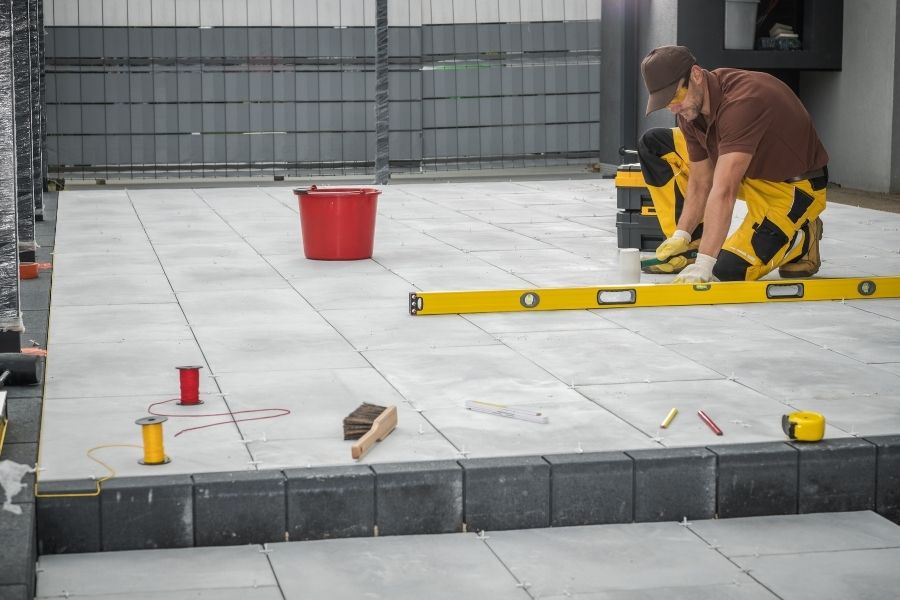
If your business is experiencing uneven floors, cracked walls, loading dock separation, or inspection failures tied to foundation movement, Austin Expert Foundation Repair provides free, no-pressure commercial foundation inspections throughout Austin, TX. We serve retail centers, industrial facilities, office buildings, warehouses, and mixed-use properties across West Lake Hills, Cedar Park, Pflugerville, Round Rock, Oak Hill, Manor, Bee Cave, and surrounding areas.
Call us today to schedule your inspection and protect your structure, your tenants, and your operations.