
Foundation Heaving in Austin, TX: Causes, Signs & Solutions
Foundation heaving in Austin, TX affects a significant number of homes and appears as uneven floors, raised slab sections, cracked walls, or doors that suddenly stop closing properly. In Austin, the presence of Taylor Black Clay soil, combined with dramatic swings between drought and heavy rainfall, creates unique ground movement that pushes foundations upward instead of allowing them to settle evenly. Foundation heaving is most common in slab-on-grade homes and older pier-and-beam structures throughout Central Texas. While seeing floors lift or walls crack can feel alarming, foundation heaving is a well-understood and solvable issue when diagnosed correctly. Understanding why this problem happens in Austin—and how it progresses—allows homeowners to take the right steps before damage becomes more extensive. Austin Expert Foundation Repair has repaired foundation heaving across Austin and surrounding communities for many years, with specialized experience in how local soil behavior, weather patterns, and construction styles contribute to this widespread foundation problem.
What Is Foundation Heaving?
Foundation heaving occurs when soil beneath a foundation expands and pushes the structure upward. Unlike foundation settling, which causes downward movement, heaving creates uplift pressure that distorts slabs, beams, and structural walls.
How Foundation Heaving Appears in Homes
Homeowners typically notice foundation heaving through:
Uneven or raised floors
Cracks forming in interior walls or ceilings
Doors and windows sticking or popping open
Gaps appearing along the foundation perimeter
One side of the house sitting higher than the other
Types of Foundation Heaving
Uniform heaving
The foundation lifts relatively evenly but still causes stress to walls and finishes.
Differential heaving
One section of the foundation rises more than others, creating severe cracking and misalignment.
Localized heaving
Often occurs near plumbing leaks or areas of poor drainage, causing isolated lifting of slab sections.
Foundation heaving often starts slowly but worsens with repeated moisture cycles if left unaddressed.
Why Austin Homes Get Foundation Heaving
Primary Cause: Taylor Black Clay Soil & Moisture Expansion
Austin sits within the Blackland Prairie, dominated by Taylor–Austin Black Clay, an expansive soil rich in montmorillonite minerals. This clay can expand dramatically when saturated and shrink up to 30% during drought, creating extreme vertical soil movement. The active soil zone typically extends 10–15 feet deep, with eastern areas such as Pflugerville and Georgetown exceeding 20 feet.
The Foundation Heaving Mechanism
The process that leads to foundation heaving in Austin follows a clear chain:
Heavy rainfall or leaks saturate clay → clay absorbs moisture and expands → upward pressure builds beneath foundation → slab or beams lift → structural stress and cracking occur
Unlike settling, heaving often happens after extended wet periods following drought. When dry clay rapidly rehydrates, it expands unevenly. If moisture accumulates more on one side of a home—due to poor drainage, leaking pipes, or uneven watering—the foundation lifts unevenly, causing differential heave.
Austin-Specific Evidence
Round Rock & Georgetown: Deep clay layers create strong uplift forces after prolonged rain
Cedar Park & Leander: Mixed limestone and clay soils cause uneven expansion
Buda & Kyle: Poor drainage intensifies moisture buildup under slabs
Historic events: Post-drought rainfall following 2011, 2022, and 2023 droughts led to widespread foundation heaving across Central Texas
Secondary Causes of Foundation Heaving
Plumbing and Slab Leaks
Leaking water lines oversaturate clay beneath foundations, dramatically increasing uplift pressure.
Overwatering and Drainage Issues
Excessive irrigation near foundations or improper downspout placement concentrates moisture and accelerates heaving.
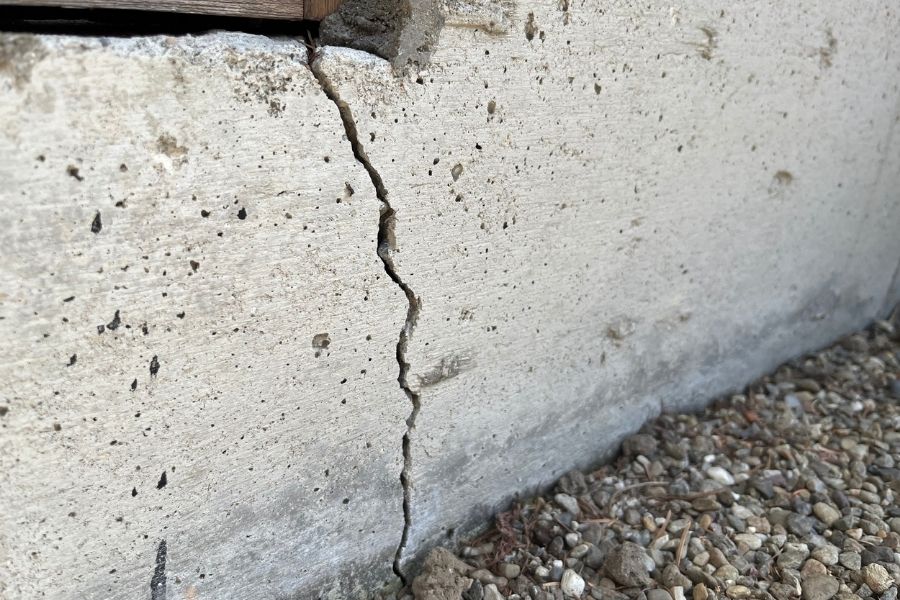
Signs of Foundation Heaving in Austin Homes
Early Warning Signs
Slight floor elevation changes
Hairline wall cracks forming suddenly after rain
Minor door or window misalignment
Advanced Symptoms
Noticeably raised slab sections
Cracks wider than 1/4 inch
Bowing walls or ceiling separation
Sagging or bouncing floors nearby lifted areas
Austin Seasonal Patterns
Foundation heaving in Austin most commonly worsens during late fall and spring, following heavy rains after summer drought. Homes in Round Rock, Pflugerville, and Kyle often experience the most noticeable changes during these transitions.
Inspect your home after major rain events and seasonal weather shifts.
When Is Foundation Heaving Serious?
Minor Heaving (Monitor)
Slight elevation changes
Hairline cracks without progression
Often seasonal and reversible
Moderate Heaving (Schedule Repair)
Uneven floors becoming noticeable
Repeated crack reopening
Common in slab homes built 1960–2000
Severe Heaving (Immediate Action)
Significant slab lift
Structural wall cracks
Visible foundation displacement
Active vs. Stable:
If floors continue rising or cracks widen over multiple seasons, the heaving is active and requires professional intervention.
When to Call for Foundation Heaving Inspection
Schedule a professional inspection if you notice:
Raised or uneven floors
Cracks forming after heavy rain
Doors and windows suddenly misaligned
Visible gaps along the foundation perimeter
Austin Expert Foundation Repair provides free, no-obligation inspections throughout Austin. Our team evaluates foundation heaving, identifies moisture sources, and recommends proven repair solutions.
Trustindex verifies that the original source of the review is Google. Great Service!!Trustindex verifies that the original source of the review is Google. Quick and fast i reccomend thisGoogle rating score: 5.0 of 5, based on 7 reviews
How to Fix Foundation Heaving in Austin, TX
Slab Foundation Repair
Stabilizes lifted slabs by correcting soil conditions and restoring structural support.
Best for slab-on-grade homes.
Structural Foundation Repair
Addresses severe heaving affecting load-bearing elements and structural walls.
Concrete Foundation Repair
Repairs damaged concrete sections caused by uplift and cracking.
Professional Inspection
Most foundation problems in Austin require expert diagnosis to identify moisture sources and soil behavior patterns.
A licensed foundation repair contractor evaluates soil conditions, foundation movement, and drainage before recommending repair.
Attempting cosmetic repairs without addressing uplift pressure leads to recurring damage and wasted expense.
Preventing Foundation Heaving in Austin Homes
Maintain consistent soil moisture year-round
Avoid overwatering near foundations
Ensure gutters and downspouts direct water away
Repair plumbing leaks immediately
Schedule annual foundation inspections
Prevention doesn’t eliminate risk but significantly reduces heaving severity in expansive clay soil environments.
Foundation Heaving Repair Cost in Austin, TX
Minor adjustments: $1,500–$3,000
Moderate stabilization: $4,000–$8,000
Major structural repairs: $8,000–$15,000+
Costs depend on foundation type, extent of uplift, soil depth, and access. Early intervention lowers total repair costs.
Foundation Heaving in Austin-Area Neighborhoods
Round Rock & Georgetown
Deep clay soils create strong upward pressure after rain.
Cedar Park & Leander
Transition zones cause uneven moisture absorption and differential heave.
Buda & Kyle
Drainage challenges increase moisture retention under slabs.
Homes in these areas benefit from routine monitoring and proactive moisture control.
Is foundation heaving worse than settling?
Both can be serious. Heaving often causes more sudden damage because uplift pressure is forceful and uneven.
What causes foundation heaving in Austin specifically?
Expansive Taylor Black Clay soil reacting to moisture changes is the primary cause.
Can foundation heaving reverse on its own?
Minor seasonal heaving may subside, but repeated cycles usually worsen damage over time.
Does insurance cover foundation heaving?
Typically no, unless directly caused by a covered plumbing failure.
Can I sell a house with foundation heaving?
Yes, but disclosure is required. Proper repair protects resale value.
Should foundation heaving be repaired immediately?
Moderate to severe heaving should be addressed promptly to prevent structural damage.
Foundation heaving in Austin is closely tied to soil moisture and rarely resolves without professional guidance. Left untreated, uplift pressure can lead to significant structural damage and higher repair costs. Austin Expert Foundation Repair delivers trusted foundation repair services designed specifically for Central Texas soil conditions. As an experienced foundation repair contractor, we help homeowners identify foundation problems early and apply long-term solutions that work with Austin’s unique geology.