
Wall Cracks in Austin, TX: Causes, Signs & Solutions
Wall cracks in Austin, TX are one of the most common signs homeowners notice when something beneath the home is shifting. These cracks can appear suddenly or develop slowly over time, showing up in interior drywall, exterior masonry, concrete stem walls, or foundation walls. In Austin, Taylor Black Clay soil and extreme seasonal weather patterns create ongoing stress on foundations, which transfers directly into walls above and around the structure. Wall cracks affect a large percentage of Austin-area homes at some point, especially properties built on slab foundations or older pier-and-beam construction. While some wall cracks are cosmetic, others indicate active foundation movement that requires professional attention. The key is understanding which cracks are harmless and which signal a deeper structural issue. Austin Expert Foundation Repair has diagnosed and repaired wall cracks throughout Austin and surrounding communities, helping homeowners understand how local soil conditions, building styles, and climate cycles contribute to this widespread problem—and how to fix it correctly.
What Are Wall Cracks?
Wall cracks are fractures that form in interior or exterior walls as a result of stress, movement, or material fatigue. In Austin homes, these cracks commonly appear in drywall, plaster, concrete foundation walls, and masonry surfaces.
Common Types of Wall Cracks
Hairline interior wall cracks
Thin cracks in drywall or plaster, often near doors, windows, or ceilings. These may be cosmetic or early indicators of movement.
Vertical wall cracks
Usually caused by settling or downward movement. These are common in slab-on-grade homes across Austin.
Horizontal wall cracks
More serious, often indicating lateral pressure from soil pushing against foundation or stem walls.
Stair-step cracks in block or brick walls
Frequently seen on exterior walls and indicate uneven foundation movement.
How Wall Cracks Develop
Wall cracks typically start as minor stress fractures. Over time, repeated soil expansion and contraction beneath the foundation causes differential movement. Walls—unable to flex like soil—crack at weak points, joints, and openings. Without correction, cracks often widen, multiply, or reappear after cosmetic repairs.
Why Austin Homes Get Wall Cracks
Primary Cause: Taylor Black Clay Soil & Seasonal Movement
Austin lies within the Blackland Prairie, where Taylor–Austin Black Clay dominates the subsurface. This expansive clay contains montmorillonite minerals and can shrink up to 30% during drought and swell dramatically when saturated. The active soil zone reaches 10–15 feet deep, with eastern areas like Pflugerville and Georgetown exceeding 20 feet.
The Wall Crack Mechanism
The process that leads to wall cracks in Austin follows a predictable chain:
Clay soil dries and shrinks → foundation loses uniform support → foundation settles or shifts → stress transfers upward → walls crack
During severe droughts—such as 2011, 2022, and 2023—soil moisture drops sharply. Clay pulls away from foundations, causing sections of the structure to settle unevenly. When rains return, the clay expands, sometimes lifting portions of the foundation. This repeated vertical and lateral movement creates stress concentrations at wall corners, window openings, and along foundation walls.
Walls cannot tolerate this movement without cracking. Drywall fractures, concrete stem walls split, and masonry develops stair-step patterns. Cracks that appear small during one season often widen after multiple soil cycles.
Austin-Specific Evidence
Round Rock & Georgetown: Deep clay causes vertical settlement cracks in slab homes
Cedar Park & Leander: Transition zones between clay and limestone create uneven movement
Buda & Kyle: Drainage challenges amplify lateral pressure on foundation walls
Freeze impact: The February 2021 freeze caused rapid soil contraction and structural stress, contributing to delayed cracking in following seasons
Secondary Causes of Wall Cracks
Plumbing Leaks & Slab Leaks
Water leaking beneath slabs erodes soil or oversaturates clay, increasing foundation movement that reflects in wall cracking.
Tree Root Moisture Extraction
Large live oaks common throughout Central Texas can pull 100+ gallons of moisture per day from soil near foundations, intensifying shrinkage on one side of a home.
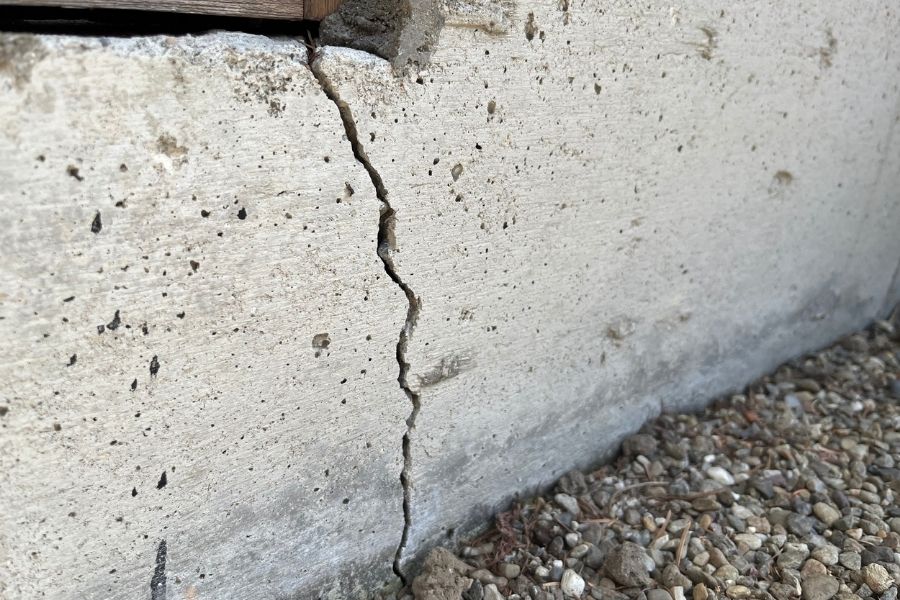
Signs of Wall Cracks in Austin Homes
Early Warning Signs
Hairline cracks in drywall near ceilings or door frames
Small vertical cracks above windows
Fine cracks in concrete stem walls
Slight separation at wall-to-ceiling joints
Advanced Symptoms
Cracks wider than 1/4 inch
Horizontal cracks in foundation or retaining walls
Stair-step cracks in brick or block walls
Doors and windows sticking near cracked areas
Visible wall displacement or bowing
Austin Seasonal Patterns
In Austin, wall cracks often appear or worsen in late summer and early fall when drought stress peaks. Many homeowners notice partial crack closure during winter rains, followed by reopening each summer—an indicator of active foundation movement.
Inspect walls after a drought, before selling a home, and annually in the fall.
When Are Wall Cracks Serious?
Minor / Cosmetic (Monitor)
Hairline cracks under 1/8 inch
No accompanying floor slope or door issues
Common from normal material movement
Moderate (Schedule Repair)
Cracks 1/8–1/4 inch wide
Cracks that widen seasonally
Often tied to foundation settling
Severe (Immediate Attention)
Horizontal wall cracks
Cracks with visible offset
Bowing or leaning walls
Rapid crack growth
Active vs. Stable:
Mark crack ends with pencil and date. If cracks extend over months, they’re active. Seasonal opening alone may be normal in Austin, but progressive growth indicates structural issues.
Wall Cracks in Austin-Area Neighborhoods
Round Rock & Georgetown
Slab homes experience vertical cracking from deep clay settlement.
Cedar Park & Leander
Mixed geology creates uneven foundation movement and recurring cracks.
Buda & Kyle
Drainage and clay expansion increase lateral pressure on foundation walls.
Homes in these areas benefit from routine foundation monitoring.
Trustindex verifies that the original source of the review is Google. Great Service!!Trustindex verifies that the original source of the review is Google. Quick and fast i reccomend thisGoogle rating score: 5.0 of 5, based on 7 reviews
How to Fix Wall Cracks in Austin, TX
Crack Repair
For stable cracks, epoxy, or polyurethane injection seals cracks and prevents moisture intrusion. Best for cosmetic or non-structural cracks.
Structural Repair
When cracks result from foundation movement, stabilization is required before cosmetic repair. Structural repair may include reinforcement or partial rebuilding.
Professional Inspection
A full inspection determines whether cracks are cosmetic or tied to foundation movement.
Professional Assessment Is Critical
In Austin, wall cracks often reflect underlying soil-driven foundation issues. Treating the crack alone without addressing the cause leads to repeat failures.
Preventing Wall Cracks in Austin Homes
Maintain consistent soil moisture during drought
Ensure gutters and drainage direct water away
Monitor cracks seasonally
Address plumbing leaks immediately
Keep large trees properly watered
Prevention reduces severity but cannot fully eliminate wall cracks in expansive clay environments.
Wall Crack Repair Cost in Austin, TX
Minor crack repair: $500–$1,500
Moderate repairs with stabilization: $3,000–$7,000
Major structural repairs: $7,000–$15,000+
Costs depend on crack type, foundation movement, wall material, and accessibility. Early repair significantly lowers total expense.
Are wall cracks in Austin homes always structural?
No. Many wall cracks are cosmetic, especially hairline drywall cracks. However, in Austin’s soil conditions, recurring or widening cracks often indicate foundation movement and should be evaluated.
What causes wall cracks in Austin specifically?
Expansive Taylor Black Clay soil, seasonal drought and rain cycles, plumbing leaks, and tree-related moisture loss all contribute to wall cracking.
Do horizontal wall cracks mean foundation failure?
Horizontal cracks are more concerning than vertical cracks and often signal lateral pressure or structural stress. They should be inspected promptly.
Can wall cracks reappear after repair?
Yes—if the underlying foundation movement isn’t addressed. Cosmetic repairs alone often fail in Austin’s clay soil conditions.
Does insurance cover wall crack repair?
Coverage varies. Cosmetic cracking is usually excluded, but cracks caused by covered events (like plumbing failures) may qualify.
Should wall cracks be repaired immediately?
Moderate to severe cracks should be evaluated quickly. Delaying repair allows movement to continue and increases repair costs.
Wall cracks in Austin rarely exist in isolation. Because expansive clay soil continuously shifts, cracks that seem cosmetic today can become structural tomorrow. The most reliable way to protect your home is a professional inspection that identifies whether cracks are stable or linked to foundation movement. Austin Expert Foundation Repair offers free wall crack and foundation inspections designed specifically for Central Texas homes.