
Slab Foundation Repair in Austin, TX
Slab foundation repair in Austin, TX addresses structural movement, cracking, and settlement caused by Central Texas soil conditions, drainage issues, and seasonal weather cycles. In Austin, slab foundations are built directly over expansive clay soils that swell during wet periods and shrink dramatically during drought. This constant movement places stress on concrete slabs, interior walls, and load-bearing elements.
Understanding Slab Foundation Systems
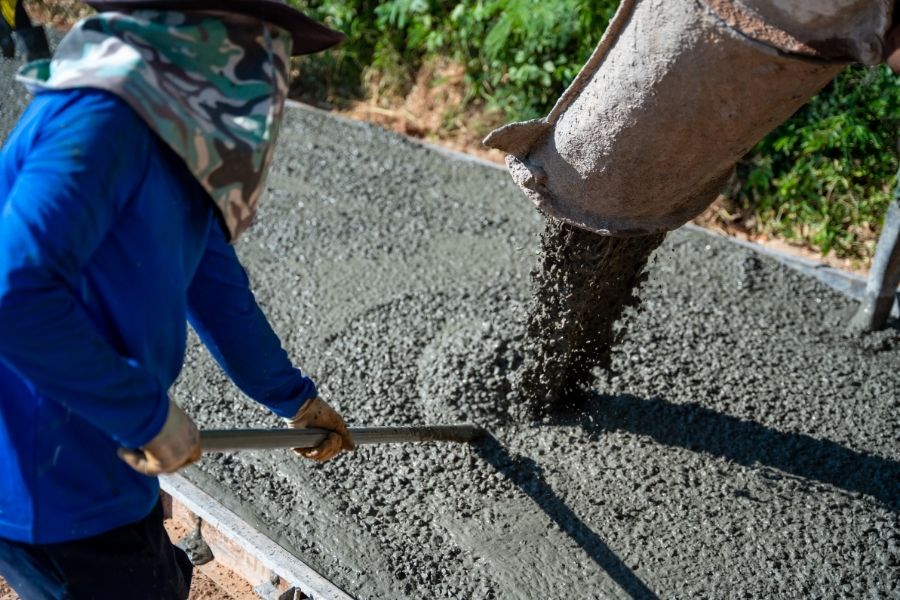
A slab foundation is a single, continuous concrete slab poured directly on prepared soil, often reinforced with steel rebar or post-tension cables. This construction method became the dominant foundation system in Austin from the 1950s through the early 2000s, largely because it allowed faster construction and lower upfront costs.
In theory, slab foundations distribute structural loads evenly. In practice, Austin’s Taylor Black Clay and Houston Black Clay expand when saturated and shrink during drought—sometimes changing volume by up to 30%. Because most slabs sit within the active clay zone (10–15 feet below grade), they move with the soil.
Today, engineers estimate that over 70% of Austin-area homes are built on slab foundations vulnerable to soil movement. These foundations are common in:
Mid-century homes in Sunset Valley and Oak Hill
Suburban developments in Leander, Cedar Park, and Round Rock
Commercial buildings along Austin’s growth corridors
Advantages include low construction cost and no crawl space moisture issues. Disadvantages include sensitivity to soil movement, difficult plumbing access, slab leaks, and cracking that often requires professional slab foundation repair.
Why Austin Homes and Buildings Need Slab Foundation Repair
Austin’s slab foundation problems are driven by soil composition, climate extremes, and development patterns unique to Central Texas.
Expansive Clay Soil Movement
The Mechanism:
Taylor Black Clay absorbs water and expands during rain, then shrinks during drought. During the 2011 drought, clay shrinkage caused widespread slab settlement across Austin neighborhoods.
Symptoms:
Slab cracks
Uneven floors
Door and window misalignment
Austin-Specific Factors:
Neighborhoods like Pflugerville and Manor sit on deeper clay layers that retain moisture longer, increasing movement severity.
Slab Heaving After Heavy Rain
The Mechanism:
After prolonged drought (such as 2022–2023), dry clay rapidly absorbs water, expanding unevenly and pushing slabs upward.
Symptoms:
Heaved interior floors
Tile cracking
Gaps between walls and ceilings
Neighborhood Impact:
Lakeway and Bee Cave experience runoff concentration due to limestone shelves directing water beneath slabs.
Post-Tension Slab Failures
The Mechanism:
Post-tension cables maintain slab tension. Soil movement, corrosion, or improper drainage can cause cable stress or failure.
Symptoms:
Sudden cracking
Audible pops
Structural displacement
Austin Factors:
Post-tension slabs are common in homes built after the 1980s across Cedar Park and Round Rock.
Poor Drainage Undermining Slabs
The Mechanism:
Negative grading and short downspouts funnel water beneath slabs, eroding soil support.
Symptoms:
Slab separation
Exterior cracking
Water intrusion
Signs You Need Slab Foundation Repair
Interior Signs
Cracked drywall
Sloping or uneven floors
Doors sticking or failing to close
Tile or concrete cracking
Exterior Signs
Brick or stucco cracks
Foundation edge separation
Drainage pooling near the slab
Urgent Warning Signs
Call immediately if you notice:
Rapid crack growth
Slab leaks
Structural displacement
How We Perform Slab Foundation Repair in Austin, TX
Step 1: Foundation Inspection
Elevation readings, soil assessment, crack mapping, and moisture analysis.
Step 2: Engineering Evaluation
Repair design based on slab type, soil depth, and load distribution.
Step 3: Soil Stabilization
Drainage correction or soil conditioning to reduce future movement.
Step 4: Slab Lifting or Stabilization
Methods such as mudjacking slab repair or pier installation.
Step 5: Crack Injection & Sealing
Epoxy injection foundation repair and foundation crack sealing.
Step 6: Final Testing
Elevation verification and performance checks.
Typical timeline: 3–7 days
Slab Foundation Repair Methods and Approaches
Concrete Pier Installation
Used for severe settlement. Transfers load to stable soil.
Mudjacking Slab Repair
Lifts settled slabs using grout injection.
Post-Tension Slab Repair
Restores slab integrity while protecting tension cables.
Crack Injection Repair
Epoxy or polyurethane injection for structural crack repair.
Slab Foundation Repair Cost in Austin, TX
Typical cost ranges:
Minor crack repair: $2,500 – $4,500
Mudjacking: $4,000 – $8,000
Pier installation: $8,000 – $18,000+
Cost factors include:
Soil depth variability
Neighborhood access
Slab type
Drainage requirements
Austin Neighborhoods We Serve
Oak Hill – Older slab systems and drainage challenges
Pflugerville – Deep clay and rapid expansion
Cedar Park – Post-tension slab issues
Lakeway – Runoff-related slab heaving
Rollingwood – High-value homes requiring precision repairs
Maintaining Your Slab Foundation in Austin, TX
Maintain consistent soil moisture
Extend downspouts 6–10 feet
Inspect after major storms
Schedule inspections every 2–3 years

Why Austin Property Owners Choose Austin Expert Foundation Repair
Local expertise, complete foundation solutions, and dependable workmanship built for Central Texas.
Locally owned & family operated
We’re part of the Austin community and treat every home as if it were our own.
Deep understanding of Austin clay soils
Our team designs slab foundation repair solutions specific to Blackland Prairie clay behavior.
Complete foundation solutions
From crack injection repair to structural slab stabilization, we address the root cause.
Residential, commercial & historic experience
Each repair is tailored to building type and load demands.
Transparent pricing & clear reporting
No pressure. No surprises. Just honest recommendations.
Read what satisfied clients across Austin say about our slab foundation repair services, including slab leveling, crack repair, post-tension slab solutions, and long-term stabilization designed for Central Texas soil conditions.
Trustindex verifies that the original source of the review is Google. Great Service!!Trustindex verifies that the original source of the review is Google. Quick and fast i reccomend thisGoogle rating score: 5.0 of 5, based on 7 reviews
How long does slab foundation repair take?
Most projects are completed within 3–7 days.
How much does slab foundation repair cost in Austin?
Costs typically range from $2,500 to $18,000+, depending on severity.
Can I live in my home during repairs?
In most cases, yes.
Why are slab foundations common in Austin?
They were widely adopted for speed and cost efficiency.
Do slab cracks always mean foundation failure?
Not always, but they should be evaluated.
If you’re noticing cracks, uneven floors, or drainage problems, schedule a free slab foundation inspection in Austin, TX today. Our experienced, family-owned team provides honest evaluations, engineered solutions, and long-lasting foundation repair built for Central Texas soil conditions.
Call now to protect your home and restore foundation stability.