
Foundation Patching in Austin, TX
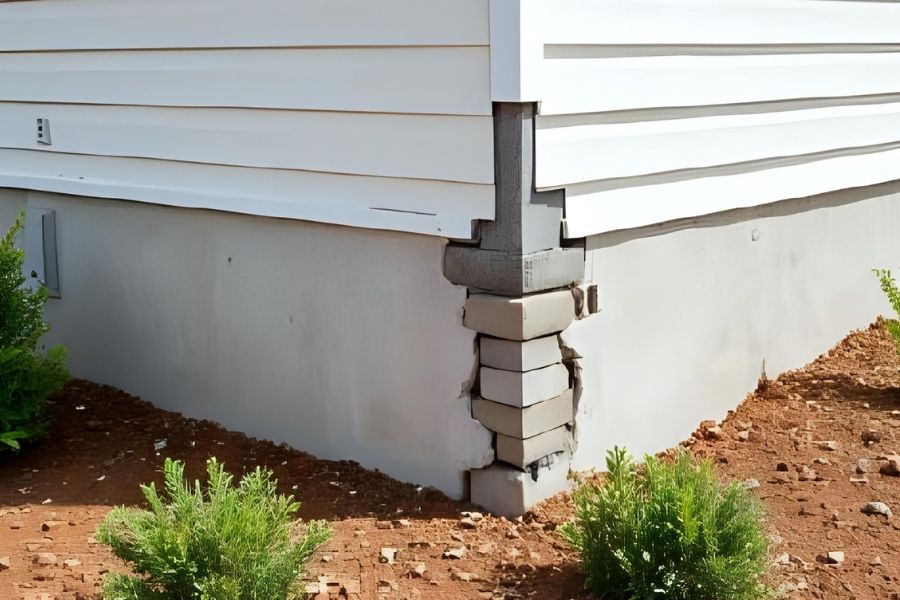
Foundation patching in Austin, TX is the process of repairing minor cracks, chips, spalling, cold joint leaks, and surface deterioration on concrete or masonry foundations. These patching repairs are intended for non-structural defects—typically small cracks under ¼ inch or cosmetic damage—caused by Austin’s clay soils, heat cycles, and moisture fluctuations. In neighborhoods like West Lake Hills and Rollingwood, where soil shrinkage and intense heat stress concrete, these minor defects are extremely common.
Understanding Foundation Patching
What foundation patching is, how it works, and why it’s common across Austin’s building stock.
Foundation patching involves the repair of minor cracks, chips, and surface flaws on a concrete foundation. These include hairline shrinkage cracks, small chips, surface scaling, honeycombing from original construction, cold joint leaks, and form-tie holes. Unlike structural repairs, patching focuses on surface-level, non-load-bearing issues—restoring the exterior integrity of the foundation while preventing water infiltration or aesthetic decline. Patching is often performed before waterproofing, painting, or exterior sealing.
Historical Context in Austin
Austin’s construction patterns—especially during the 1950s–1990s building boom—resulted in many slab foundations prone to shrinkage cracks and minor surface imperfections. During this period, contractors frequently used high-water concrete mixes to extend working time in Texas heat. When curing in temperatures above 95°F, rapid moisture evaporation created hairline cracks still visible today.
Homes in Barton Creek, Sunset Valley, Oak Hill, Jollyville, The Hills, and Lakeway commonly show these early-era cosmetic cracks. By some estimates, 40–50% of Austin homes built before 1990 require periodic foundation patching to address shrinkage, seasonal movement, and cosmetic deterioration.
Why Foundation Patching Exists in Austin
Austin sits on the Taylor, Houston, and Lewisville Black Clay formations, all part of the Blackland Prairie geological region. These montmorillonite clay soils are known for dramatic expansion and contraction:
In wet seasons → clay swells, pushing on concrete
In drought → clay shrinks, pulling away from foundations
This movement creates non-structural cracks, minor voids, and cosmetic scaling. Patching preserves the foundation surface, protects waterproofing systems, and prevents minor cracks from expanding.
Advantages of Foundation Patching
Prevents water entry
Prepares foundation for coatings
Improves home appearance
Supports long-term waterproofing
Low-cost, fast repair
Essential for resale inspections
Disadvantages
Not a structural fix
Recurrence possible during extreme soil movement
Limited to cracks ≤¼ inch
Despite limitations, patching is a critical component of foundation care in Austin due to soil behavior, climate, and construction history.
Why Austin Homes & Buildings Need Foundation Patching
This section connects soil science, weather events, and local geography to foundation patching needs.
Austin’s foundations experience unique stressors due to a combination of expansive soils, heat, drought, sudden storms, and freeze-thaw events. These factors cause small cosmetic issues that, if left untreated, can turn into water intrusion or surface deterioration.
Below are the primary Austin-specific causes:
1. Shrinkage Cracks from Rapid Concrete Curing
The Mechanism:
Austin’s heat accelerates concrete curing. Temperatures often exceed 95–108°F, especially in open sites in Cedar Park, Leander, and Bee Cave. Rapid evaporation leads to internal tension, causing:
Hairline cracks (<⅛ inch)
Diagonal or vertical surface cracks
Smooth, shallow openings
Austin-Specific Details:
During the 2011 drought and 2022–2023 heat waves, rapid curing was common, resulting in widespread cosmetic cracking.
Our team frequently sees these cracks during Foundation Inspection appointments, especially in homes built during those heat-intense years.
2. Clay Soil Expansion & Contraction (Blackland Prairie Soil)
The Mechanism:
Montmorillonite clay in Austin can expand 200–300% when saturated. During drought, it contracts significantly. This movement causes foundation surface stress, especially around:
Slab edges
Corners
Cold joints
Areas near retaining walls
Neighborhood Examples:
Pflugerville / Round Rock / Manor: Deep active clay zone (10–15 ft) → more cosmetic cracking
West Lake Hills / Barton Creek: Clay-limestone transitions → uneven soil pressure
Lakeway / Hudson Bend: Moisture influence from Lake Travis → more scaling and spalling
Our foundation solutions focus on stabilizing these defects before they grow.
3. Water Intrusion Through Minor Cracks & Cold Joints
The Mechanism:
Small cracks and cold joints become water entry points during heavy storms. Austin often receives 2–6 inches of rain in a single hour, forcing water into the smallest openings.
Symptoms:
White efflorescence
Damp foundation walls
Water trickling during storms
Musty odors
Neighborhood Impact:
Homes in Lost Creek, Jonestown, and The Hills—areas prone to slope drainage—often need hydraulic patching and sealing to prevent stormwater penetration.
4. Freeze-Thaw Surface Spalling (Rare but Significant)
The Mechanism:
Moisture in concrete freezes, expands, and pops off surface layers. This was dramatically seen during the 2021 winter freeze, which caused:
Flaking
Spalling
Small holes or pitted areas
Most Affected Areas:
Dripping Springs
Lago Vista
The Hills
Homes in these colder microclimates suffered concrete surface damage, now requiring patching and resurfacing.
Signs You Need Foundation Patching in Austin, TX
How to identify patch-worthy vs. structural cracks.
Surface-Level Symptoms
Hairline cracks (<⅛”)
Cracks ⅛–¼” with no displacement
Scaling or flaking
Small chips at corners
Honeycomb concrete pockets
Rough or crumbly texture
Moisture-Related Signs
Seepage during storms
White efflorescence
Damp stains
Moisture at cold joints or form-tie holes
Exterior Surface Damage
Void areas near soil line
Minor spalling
Chips caused by lawn equipment or impacts
Call Immediately If:
Crack widens after drought → possible movement
Water enters during light rain → urgent sealing needed
Cracks intersect corners → potential expansion risk
Any crack >¼ inch → requires structural evaluation
Foundation patching is often recommended following a Foundation Inspection to confirm the issue is non-structural.
How We Perform Foundation Patching in Austin, TX
Our team uses a precise, step-based approach tailored to Austin’s moisture and soil conditions.
Step 1: Detailed Foundation Inspection & Crack Mapping
Timeline: 1–2 hours
We determine crack type, depth, width, location, moisture, and underlying soil pressure. This step helps differentiate minor patching from Structural Foundation Repair needs.
Step 2: Surface Preparation & Cleaning
Timeline: Same day
We remove loose concrete, scaling, dust, and efflorescence. For humid areas like Lakeway and Bee Cave, drying time is enforced to ensure proper bonding.
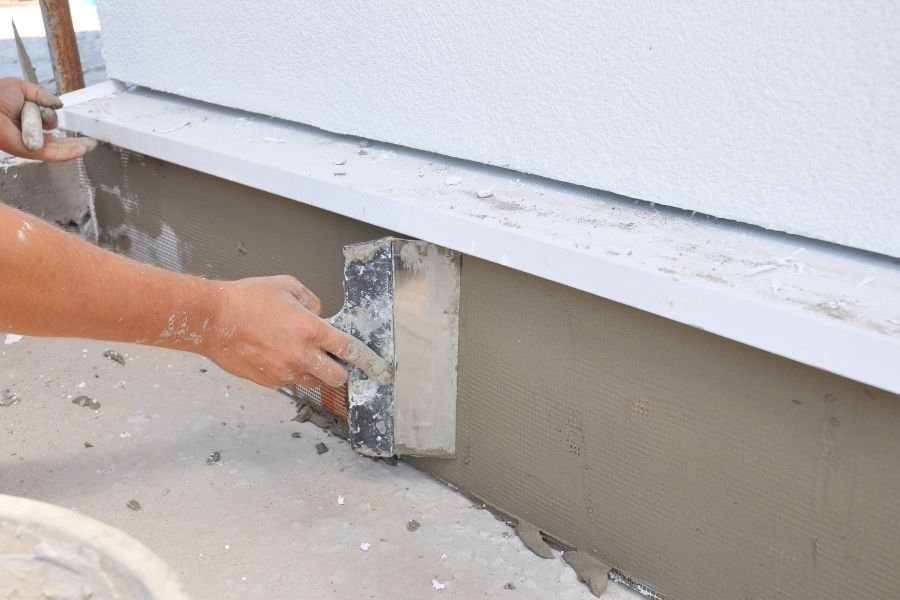
Step 3: Crack Filling & Concrete Patching
Timeline: 1–2 days
Techniques vary depending on crack type:
Epoxy fillers → hairline shrinkage cracks
Polymer-modified mortar → cosmetic cracks
Hydraulic cement → water-entry points
Mortar patching → masonry foundations
Surface repair → spalling, scaling
This is where our team’s foundation solutions make the biggest impact.
Step 4: Sealing, Bonding, & Waterproofing Integration
Timeline: 1 day
We apply elastomeric seals or bonding agents to ensure moisture protection. This step is especially important in Austin where soil-borne moisture fluctuates rapidly.
Step 5: Cosmetic Blending & Surface Restoration
Timeline: 1 day
We smooth and blend repairs to match the existing foundation texture—a key factor for historic buildings and home resale.
Step 6: Final Quality Check & Documentation
We verify moisture protection, patch adhesion, and finish consistency. Documentation includes photos and recommendations for future maintenance.
Foundation Patching Methods & Approaches
Hairline Crack Injection / Filling
For shrinkage cracks under ⅛ inch.
Cost: $150–$450 per crack
Surface Spalling Repair & Skim Coating
Repairs flaking or damaged concrete surfaces.
Cost: $300–$1,200
Water-Entry Patch (Hydraulic Cement)
Used for leaks at cold joints or small penetrations.
Cost: $250–$800
Masonry Mortar Joint Patching
Ideal for older stone or block foundations.
Cost: $200–$600
These foundation solutions are essential preventive services across Austin.
Foundation Patching Cost in Austin, TX
Foundation patching in Austin typically costs $250–$2,500, depending on crack width, moisture, and repair complexity.
Cost Breakdown
Hairline cracks: $250–$600
Moderate cracks: $400–$900
Surface repair / spalling: $300–$1,200
Leak sealing: $350–$1,000
Multiple cracks: $1,000–$2,500
What Affects Cost? (Austin-Specific)
Clay depth varies 6–20 ft
Homes in West Lake Hills need more moisture sealing
Round Rock & Pflugerville homes have more shrinkage cracks
Freeze events increase spalling repair costs
Rainy season → higher moisture prep time
Financing available.
Austin Neighborhoods We Serve
West Lake Hills
Clay/limestone transitions cause edge cracking and small voids.
Rollingwood
Hillside runoff creates moisture-driven surface defects.
Bee Cave & Lakeway
Higher humidity and fast-curing concrete produce shrinkage cracks.
Round Rock & Pflugerville
Deep clay soil results in recurring surface cracks.
Dripping Springs & Barton Creek
Freeze-thaw cycles cause spalling and scaling.
Maintaining Your Foundation in Austin, TX
Water during summer droughts
Keep soil from pulling away
Maintain gutters and grading
Seal cracks before rainy seasons
Inspect after freeze events
Schedule an annual Foundation Inspection
Proper maintenance prevents cosmetic cracks from expanding.
Why Austin Property Owners Choose Austin Expert Foundation Repair
Trusted, locally rooted specialists delivering complete foundation solutions across Central Texas.
Locally owned and family operated, Austin Expert Foundation Repair understands the unique demands of the Blackland Prairie’s expansive clay soils better than anyone. Our team has decades of combined experience providing foundation patching, Structural Foundation Repair, Foundation Restoration, Commercial Foundation Repair, Foundation Inspection, and even related services like crawl space repair for homes and buildings throughout Austin, TX.
We offer full foundation solutions, from cosmetic repairs and moisture sealing to structural corrections and preventative maintenance. Because we work on residential properties, commercial structures, industrial facilities, and historic buildings, our approach adapts to each building’s age, soil conditions, and construction style.
Property owners appreciate our transparent pricing, clear communication, and detailed reporting. Whether you need surface crack repair, crawl space repair, or long-term reinforcement, our team delivers dependable, Austin-specific repairs built for the region’s climate, drought cycles, and shifting clay soils.
Hear from homeowners across Austin who trusted our team for reliable foundation solutions, including foundation patching, Structural Foundation Repair, Foundation Restoration, and more.
Trustindex verifies that the original source of the review is Google. Great Service!!Trustindex verifies that the original source of the review is Google. Quick and fast i reccomend thisGoogle rating score: 5.0 of 5, based on 7 reviews
How do I know if a crack only needs foundation patching?
Hairline cracks under ⅛ inch or small cosmetic chips are usually patchable. Our team confirms this during a Foundation Inspection and ensures the issue isn’t structural.
How much does foundation patching cost in Austin?
Most homes spend $250–$2,500, depending on crack size, moisture, and repair type. Austin’s clay soils can increase patching needs, especially after drought.
How long does foundation patching take?
Repairs typically take 3–7 days, including prep, patching, and curing. Humid neighborhoods like Lakeway or Hudson Bend may need longer drying time.
Can patched cracks reopen because of Austin’s soil movement?
Yes, during extreme wet–dry cycles. Our team uses foundation solutions designed for Blackland Prairie clay to reduce the chance of recurrence.
When does a crack require Structural Foundation Repair instead of patching?
Cracks wider than ¼ inch, cracks with displacement, or cracks linked to sloping floors or sticking doors may require Structural Foundation Repair—not just patching.
If you’ve noticed hairline cracks, surface chips, moisture stains, or cosmetic foundation damage, now is the time to act. Austin Expert Foundation Repair provides free inspections and tailored foundation solutions designed specifically for Austin’s active clay soils and seasonal extremes. We proudly serve Austin, West Lake Hills, Bee Cave, Lakeway, Rollingwood, Round Rock, Dripping Springs, and all surrounding communities.
Contact us today to protect your home with reliable, long-lasting foundation patching.